
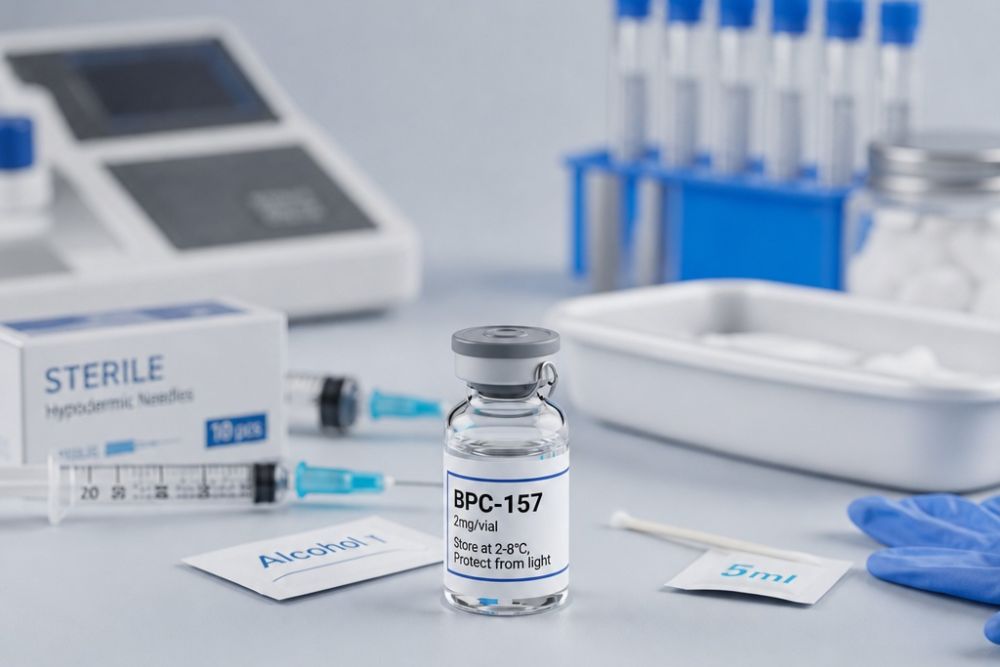
BPC-157 Explained: What It Does, Who It’s For, and What to Expect
BPC-157 has become one of the most widely discussed peptides in sports medicine, regenerative medicine, and injury-recovery circles. It is frequently promoted online as a treatment for tendon injuries, muscle strains, joint pain, gastrointestinal problems, and accelerated healing.
The scientific reality is more nuanced.
BPC-157 has produced potentially meaningful effects in laboratory and animal studies, particularly in research involving tissue repair, blood vessel formation, inflammation, and gastrointestinal protection. However, there is not yet enough high-quality human evidence to establish that it safely or reliably produces the same results in patients.
BPC-157 is not approved by the U.S. Food and Drug Administration for the treatment of injuries, pain, gastrointestinal conditions, or any other medical condition. There is also no universally accepted human dosing protocol, standardized pharmaceutical formulation, or established long-term safety profile.
That does not mean BPC-157 has no scientific relevance. It means it should be discussed accurately as an investigational peptide rather than marketed as a proven shortcut to healing.
What Is BPC-157?
BPC-157, sometimes called Body Protection Compound 157, is a laboratory-produced peptide composed of 15 amino acids. It is based on a sequence associated with a protein found in human gastric juice.
Peptides are short chains of amino acids that may act as signaling molecules within the body. Different peptides can influence different biological pathways, including hormone signaling, inflammation, metabolism, tissue repair, and cellular communication.
BPC-157 has attracted attention because preclinical studies suggest it may interact with several processes involved in healing. Most of those findings, however, come from animal models and laboratory research rather than controlled human clinical trials.
What Is BPC-157 Supposed to Do?
BPC-157 is primarily being studied for its potential effect on tissue protection and repair.
Preclinical research has explored whether it may influence:
- Blood vessel formation around injured tissue
- Fibroblast activity involved in producing connective tissue
- Tendon-to-bone and ligament healing
- Muscle recovery
- Inflammatory signaling
- Gastrointestinal tissue protection
- Nitric oxide pathways involved in circulation and tissue response
These proposed mechanisms help explain why BPC-157 has become popular among athletes, physically active adults, and patients with persistent musculoskeletal problems.
They do not establish that BPC-157 has been proven to repair human tendons, rebuild cartilage, heal gastrointestinal disease, or shorten recovery time.
A compound can demonstrate biological activity in a laboratory without ultimately proving safe, effective, or clinically useful in people. Dosage, absorption, metabolism, formulation, delivery method, product purity, and long-term effects must all be evaluated before a treatment can be considered established.
What Does the Human Research Show?
Human research on BPC-157 is exceptionally limited.
Recent scientific reviews have found fewer than 30 total participants across a small number of uncontrolled human pilot studies. Areas examined have included knee pain, interstitial cystitis, and intravenous safety or pharmacokinetics.
One published intravenous pilot study included only two adults. Neither participant experienced an identified adverse effect during the short study period, but a two-person study cannot establish general safety, effective dosing, treatment efficacy, or long-term risk.
There have not been completed, large, randomized Phase II or Phase III clinical trials demonstrating that BPC-157 safely improves tendon injuries, muscle tears, joint degeneration, gastrointestinal disease, or post-surgical healing.
The current evidence can therefore be summarized as follows:
BPC-157 has interesting preclinical findings, but its effectiveness and long-term safety in humans remain unproven.
That distinction matters when patients are evaluating claims made by peptide clinics, online sellers, influencers, or unregulated research-chemical websites.
Is BPC-157 FDA-Approved?
No. BPC-157 is not an FDA-approved medication.
The FDA has stated that it has limited safety information for proposed routes of BPC-157 administration and has identified potential concerns involving immune reactions, peptide-related impurities, and characterization of the active pharmaceutical ingredient.
The FDA has also explained that compounded drugs are not FDA-approved. The agency does not independently verify the safety, effectiveness, quality, strength, or purity of a compounded medication before it is marketed.
As of July 2026, the FDA continues to evaluate BPC-157-related substances within its pharmacy compounding review process. That ongoing evaluation should not be interpreted as approval or confirmation that BPC-157 is safe or effective.
Patients should be particularly cautious of websites selling products labeled “for research purposes only” while simultaneously providing instructions for personal injection or therapeutic use. Products purchased from unregulated online sources may present additional risks involving sterility, contamination, incorrect concentration, substitution, and uncertain ingredients.
Who Is Typically Interested in BPC-157?
People asking about BPC-157 commonly include:
- Athletes with tendon or ligament injuries
- Adults with recurring joint or soft-tissue pain
- Patients recovering from muscle strains
- People experiencing persistent symptoms after an injury
- Active adults attempting to avoid prolonged downtime
- Patients who have not improved with basic conservative treatment
- People interested in regenerative or longevity-focused medicine
Interest in BPC-157 does not necessarily mean it is the correct treatment.
Persistent pain may be caused by a partial or complete tendon tear, osteoarthritis, nerve compression, instability, stress fracture, inflammatory disease, altered biomechanics, referred spinal pain, or another condition requiring a different treatment strategy.
The first priority should be establishing an accurate diagnosis.
Who May Not Be an Appropriate Candidate?
Because human safety data are limited, there is no complete, evidence-based list of BPC-157 contraindications.
That lack of information is itself a reason for caution.
An investigational peptide may be particularly inappropriate for people who:
- Are pregnant, attempting to become pregnant, or breastfeeding
- Have an active or recent malignancy
- Have significant immune-system disorders
- Take medications that may interact with healing, clotting, circulation, or immune function
- Have unexplained pain, swelling, weakness, bleeding, or neurological symptoms
- Have not received an appropriate diagnosis
- Are subject to athletic anti-doping regulations
- Plan to purchase or inject a product from an unverified online source
Patients should disclose all medications, supplements, peptides, hormones, and performance-enhancing substances to their physician. Products described as natural, regenerative, or bioidentical can still create clinically meaningful risks.
What Should You Expect From a Responsible Medical Evaluation?
A responsible consultation should not begin with a predetermined peptide protocol. It should begin with the patient’s diagnosis, medical history, goals, and risk profile.
At Carroll Total Healthcare, Dr. Brent T. Carroll approaches musculoskeletal and regenerative concerns from the perspective of a board-certified family medicine and sports medicine physician with more than two decades of clinical experience.
An evaluation may include:
A Detailed Medical History
The physician should determine when the symptoms began, how the injury occurred, what movements aggravate it, which treatments have been attempted, and whether the condition is improving, recurring, or progressively worsening.
Medical history also matters. Diabetes, vascular disease, autoimmune illness, nutritional deficiencies, hormone abnormalities, medication use, sleep quality, and smoking can all affect tissue recovery.
A Focused Physical Examination
Strength, stability, range of motion, swelling, tenderness, neurological findings, gait, and movement mechanics can help distinguish between different causes of pain.
A painful shoulder, for example, may involve the rotator cuff, labrum, biceps tendon, joint capsule, cervical spine, or more than one structure.
Appropriate Diagnostic Testing
Depending on the condition, evaluation may include X-rays, ultrasound, MRI, laboratory studies, or referral for additional testing.
Treatment based solely on the location of pain, without establishing the underlying diagnosis, can delay appropriate care.
A Review of Established Treatment Options
Evidence-based care may include activity modification, therapeutic exercise, physical therapy, medication management, bracing, targeted injections, osteopathic treatment, platelet-rich plasma, or referral for surgical evaluation when appropriate.
The newest treatment is not automatically the best treatment. The appropriate intervention is the one that best matches the diagnosis, available evidence, patient risk, and expected benefit.
A Candid Discussion of Investigational Therapies
When patients ask about BPC-157 or another investigational peptide, the discussion should cover:
- The quality of available human evidence
- What has and has not been established
- FDA and compounding status
- Potential product-quality concerns
- Known and unknown risks
- Evidence-supported alternatives
- The possibility that no peptide is indicated
No ethical physician should guarantee tissue regeneration, accelerated healing, pain elimination, or a specific recovery timeline from BPC-157.
How Quickly Is BPC-157 Supposed to Work?
There is no scientifically validated human timeline for BPC-157 treatment.
Online claims frequently describe noticeable improvement within days or weeks, but those statements are generally based on personal testimonials, uncontrolled observations, marketing content, or extrapolation from animal studies.
Pain improvement also does not necessarily mean that injured tissue has structurally healed. A patient may feel better before a tendon, ligament, muscle, or bone is ready to tolerate unrestricted activity.
Returning to exercise too quickly can worsen an injury even when symptoms temporarily decrease.
Recovery should therefore be measured through function, strength, mobility, tissue tolerance, and, when necessary, follow-up imaging rather than pain alone.
Is BPC-157 the Same as PRP?
No. BPC-157 and platelet-rich plasma are fundamentally different.
PRP is prepared from a patient’s own blood. The blood is processed to concentrate platelets and associated signaling proteins before the preparation is placed into a targeted area.
BPC-157 is a laboratory-produced peptide. It is not derived from the patient’s blood and is not an FDA-approved medication.
Although both may be discussed within regenerative medicine, they have different biological characteristics, regulatory considerations, preparation methods, evidence bases, and potential risks. They should not be treated as interchangeable therapies.
Can BPC-157 Replace Physical Therapy or Proper Rehabilitation?
No investigational peptide should be considered a substitute for diagnosing the injury and correcting the factors that contributed to it.
Tendon and joint problems often involve more than damaged tissue. Weakness, restricted mobility, poor movement mechanics, excessive training load, inadequate recovery, and underlying medical conditions can perpetuate symptoms.
Even when an injection or regenerative procedure is appropriate, rehabilitation remains essential. Treatment may influence the biological environment around an injury, but it does not automatically restore strength, coordination, stability, or movement quality.
The Bottom Line on BPC-157
BPC-157 is an investigational peptide with potentially interesting biological effects demonstrated primarily in laboratory and animal studies.
It is not FDA-approved. Human evidence remains sparse. Standardized dosing, pharmaceutical formulation, treatment effectiveness, and long-term safety have not been established.
Patients in Cumming and throughout Forsyth County who are considering BPC-157 should not rely on social media testimonials or order injectable products from unregulated websites. Persistent pain or delayed recovery deserves a thorough medical and musculoskeletal evaluation before any treatment is selected.
For patients from Cumming, Vickery, Windermere, Creekstone Estates, Polo Golf and Country Club, The Manor, and surrounding North Georgia communities, Carroll Total Healthcare provides physician-led family medicine, sports medicine, and regenerative and wellness evaluations under the direction of Brent T. Carroll, DO.
The objective is not to sell every patient the newest treatment. It is to determine what is medically reasonable, what is supported by the available evidence, and what offers the most appropriate path toward improved function and long-term health.
Frequently Asked Questions About BPC-157
What is BPC-157 used for?
BPC-157 is promoted for tendon injuries, muscle strains, joint pain, gastrointestinal conditions, and recovery. These uses have not been approved by the FDA, and strong human clinical evidence has not established that BPC-157 safely or effectively treats these conditions.
Is BPC-157 legal?
BPC-157 is not an FDA-approved medication. Its regulatory and compounding status is complex and continues to be evaluated. Patients should not assume that online availability means a product is approved, legal for a particular use, pharmaceutical-grade, or safe.
Does BPC-157 heal tendons?
Animal and laboratory studies suggest BPC-157 may influence processes involved in tendon healing. Controlled human trials have not yet established that it reliably heals tendon injuries in people.
Is BPC-157 safe?
The long-term safety of BPC-157 in humans is unknown. Published human exposure is extremely limited, and the FDA has identified insufficient safety information and potential concerns involving immune reactions and product impurities.
Can I buy BPC-157 online?
Products sold online may be labeled as research chemicals and may not be manufactured under standards appropriate for human treatment. Their identity, concentration, purity, and sterility may be uncertain. Self-administering an injectable product from an unverified source can create serious health risks.
Should I ask a sports medicine physician about BPC-157?
Yes. A sports medicine physician can evaluate the underlying injury, explain the limitations of the BPC-157 evidence, identify established treatment options, and determine whether additional imaging, rehabilitation, regenerative treatment, or specialty care is appropriate.
Medical Disclaimer: This article is provided for general educational purposes and does not constitute individualized medical advice. BPC-157 is not approved by the FDA for the diagnosis, treatment, cure, or prevention of any disease or injury. Treatment recommendations require an individual medical evaluation.